
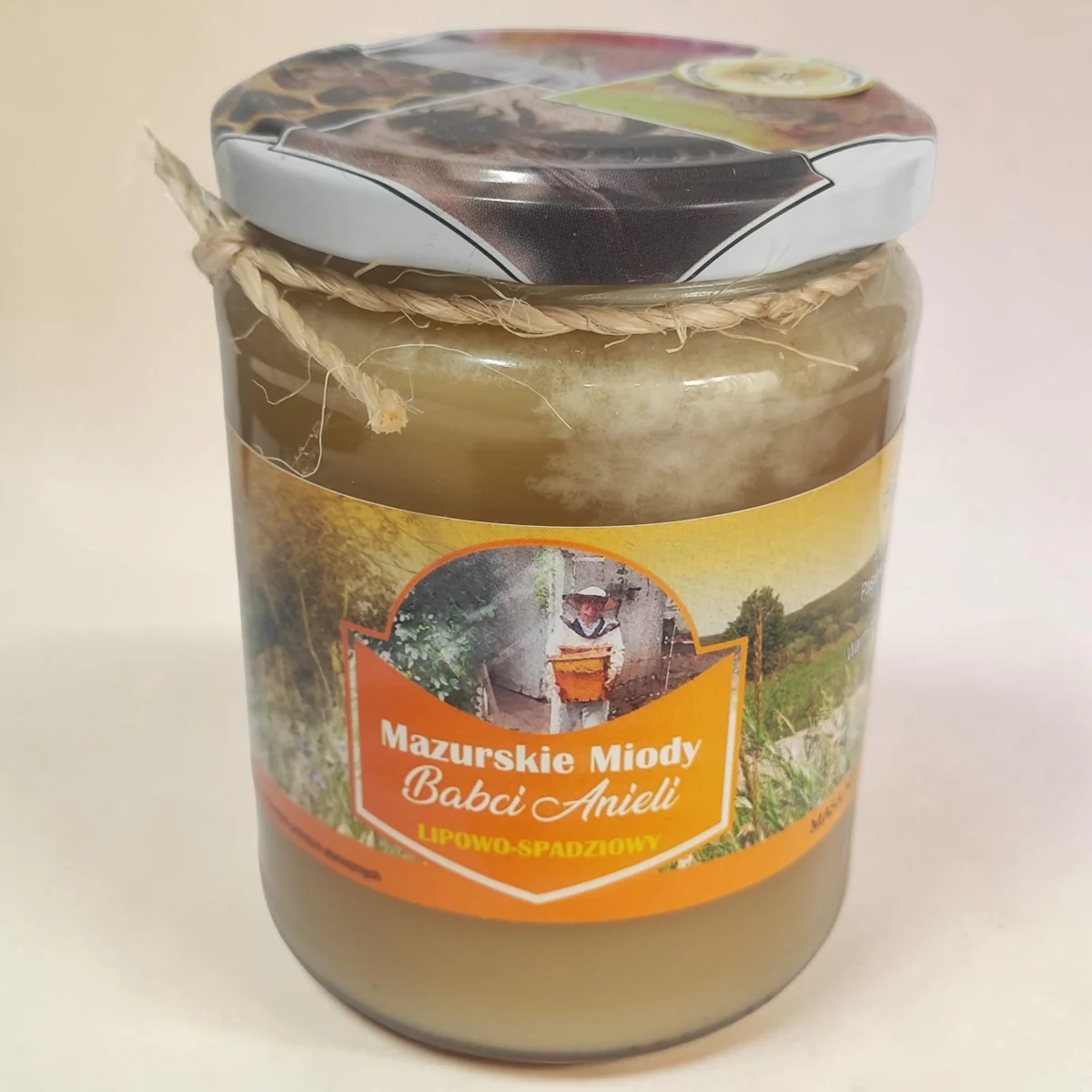
Description
What is Linden and Honeydew Honey?
- Origin
Linden and honeydew honey is a unique blend created by bees that collect both nectar from linden (lime blossom) trees and honeydew secreted by sap-feeding insects living on forest trees. This combination results in a honey that brings together the floral qualities of linden nectar and the rich, mineral depth of honeydew. - Region
This type of honey is especially popular in Central and Eastern Europe, including Poland, where vast forests and abundant linden trees provide ideal conditions for its production. It is highly valued for its balanced flavor and natural richness.
Characteristics of Linden and Honeydew Honey
- Color
The color typically ranges from amber to dark amber, sometimes with greenish or brown tones. The exact shade depends on the proportion of linden nectar to honeydew and the types of trees present. - Flavor Profile
It offers a well-balanced taste—moderately sweet with a distinctive combination of floral freshness and deep, woody richness. You may notice notes of mint, herbs, resin, and a slight bitterness typical of linden honey, complemented by the malty, caramel-like undertones of honeydew. - Aroma
The aroma is expressive and layered, with noticeable herbal and slightly minty notes from linden blossoms, combined with warm, woody and forest-like scents from the honeydew.
Health Benefits
- Rich in Minerals
Thanks to its honeydew component, this honey contains higher levels of minerals such as potassium, magnesium, calcium, and iron compared to purely floral honeys. - Antioxidants
It is a good source of antioxidants, which help protect the body from oxidative stress and support overall health. - Soothing Properties
Linden honey is traditionally known for its calming and soothing effects, making this blend especially popular for relieving colds, coughs, and sore throats. - Antibacterial and Antimicrobial Properties
Like all natural honeys, it has antibacterial qualities that can support immune health and aid in minor wound care. - Digestive Support
The presence of natural sugars and oligosaccharides may help promote healthy gut bacteria and support digestion.
Uses of Linden and Honeydew Honey
- Culinary Uses
This honey is highly versatile. It works beautifully in teas (especially herbal and black teas), as well as in marinades, dressings, and baked goods. It pairs well with cheeses, particularly soft and creamy varieties, and can be drizzled over yogurt, cereals, or fruit. - Therapeutic Uses
Often used as a natural remedy for respiratory issues, it is especially valued during cold and flu season for its soothing and mildly calming effects. - Skin Care
Its natural antibacterial and moisturizing properties make it suitable for use in face masks and skin treatments, helping to hydrate and protect the skin.
Quality Indicators
- Crystallization
Linden and honeydew honey may crystallize at a moderate pace. The presence of honeydew can slow the process slightly, while the linden nectar may encourage a finer, smoother crystallization. This is a natural sign of authenticity.
Why Choose Linden and Honeydew Honey?
- Balanced Flavor and Complexity
It combines the best of both worlds—the refreshing, slightly minty floral notes of linden and the deep, rich character of honeydew—making it a distinctive and enjoyable honey. - Nutritional Value
With its mix of floral and honeydew origins, it offers a broader range of nutrients and beneficial compounds. - Natural and Traditional
Produced in forest-rich regions using traditional beekeeping practices, it reflects a natural and sustainable approach to honey production, supporting both biodiversity and local beekeepers.
Reviews
There are no reviews yet.